

The High-Performance All-Rounder Evolves For 2027!
The Evo has long occupied one of the the top spot as one of the most versatile kites in the Duotone range. It is the kite designed to do pretty much anything, combining accessible freeride performance with the speed, lift, and handling required for big air, freestyle, and even wave riding. The Evo D/LAB takes that versatile platform and pushes it towards the very top of Duotone’s performance spectrum.
For 2027, Duotone has refined the formula again. The new Evo D/LAB combines an Aluula D/TX airframe, a three-strut layout, updated canopy construction, and a new six-point bridle system. The result is intended to be faster, lighter, more direct, and increasingly stable across an exceptionally broad wind range.
This is not a specialist competition kite built around a single discipline. Instead, Duotone has focused on producing an elite-level all-rounder capable of delivering explosive big air performance one day, powered freeriding the next, and a fast, responsive session in the waves when the conditions change.
The Aluula D/TX Airframe
At the heart of the Evo D/LAB is its Aluula D/TX frame. This material has been developed with Duotone to combine extremely low weight with exceptional stiffness, giving the designers greater control over the kite’s flex, torsion, and structural response.
Reducing the weight of the airframe helps the kite remain responsive in lighter winds, allowing it to accelerate quickly and react immediately to steering input. The additional rigidity becomes increasingly important as the wind builds, helping the kite maintain its intended shape rather than allowing the leading edge to twist or deform under heavy loading.
This should create two very different, but equally valuable, characteristics. At the lower end of its wind range, the Evo D/LAB will feel light, efficient, and willing to fly. At the top end, the same rigid structure is designed to keep the kite stable, precise, and predictable when the rider is heavily powered.
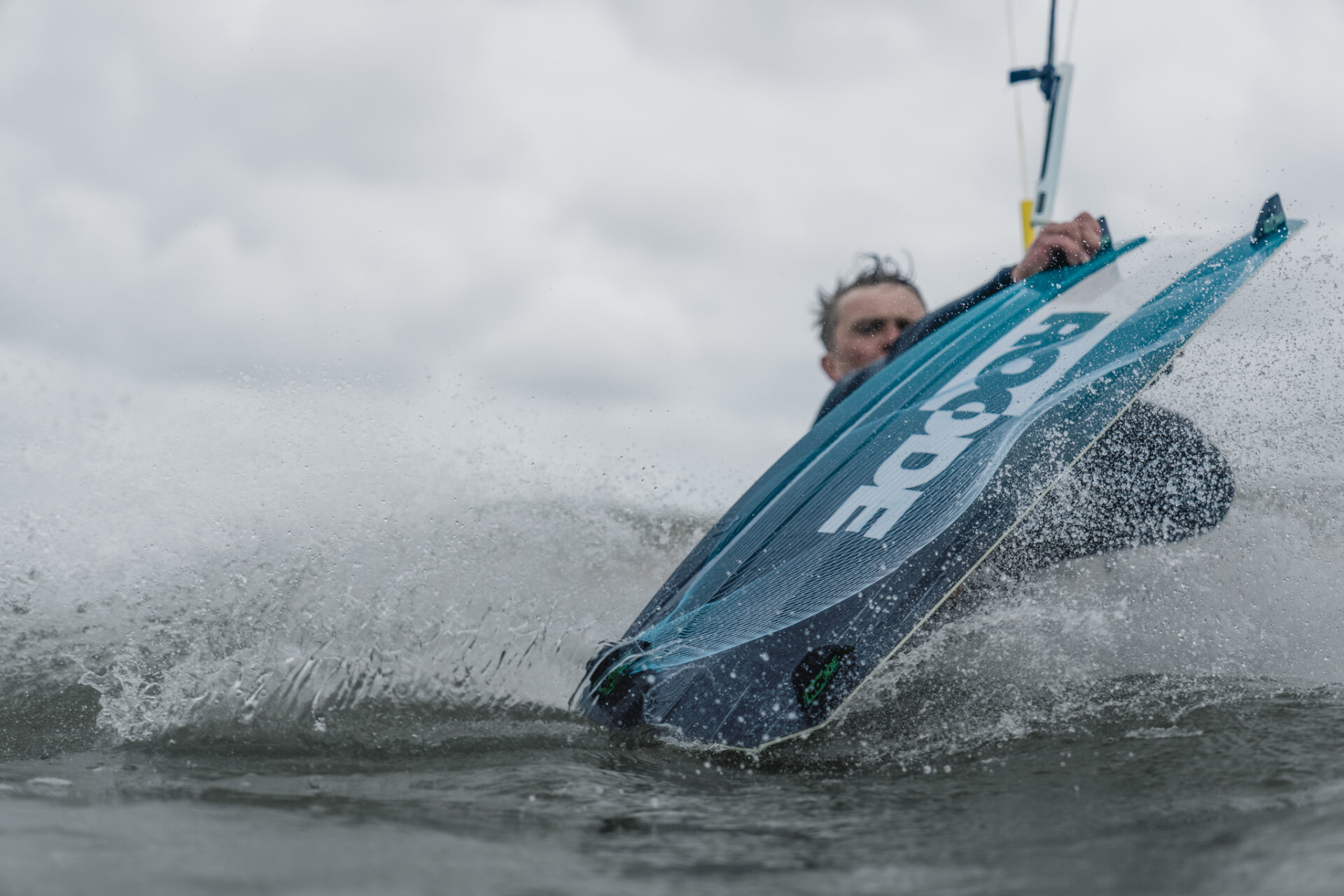
“We didn’t start with a brand, we just wanted to build a board properly and see where it went.”
The three-strut construction retains enough structural support for aggressive riding while avoiding the additional weight and complexity of a five-strut platform. It is a logical choice for a kite that needs to balance big air stability with the speed and agility required for loops, freestyle, foiling and wave riding.
Six Points of Support
One of the significant design features of the 2027 Evo D/LAB is its new six-point bridle system. The additional support helps maintain a compact and stable leading edge profile while distributing loads more effectively across the frame.
The aim is to deliver smoother and more direct power transmission between the kite and the rider. When the kite is loaded hard during a take-off, loop, or powered turn, the bridle supports the leading edge and helps prevent unwanted deformation. This allows the Evo D/LAB to maintain a more consistent profile through gusts and during the rapidly changing loads generated by modern big air riding.
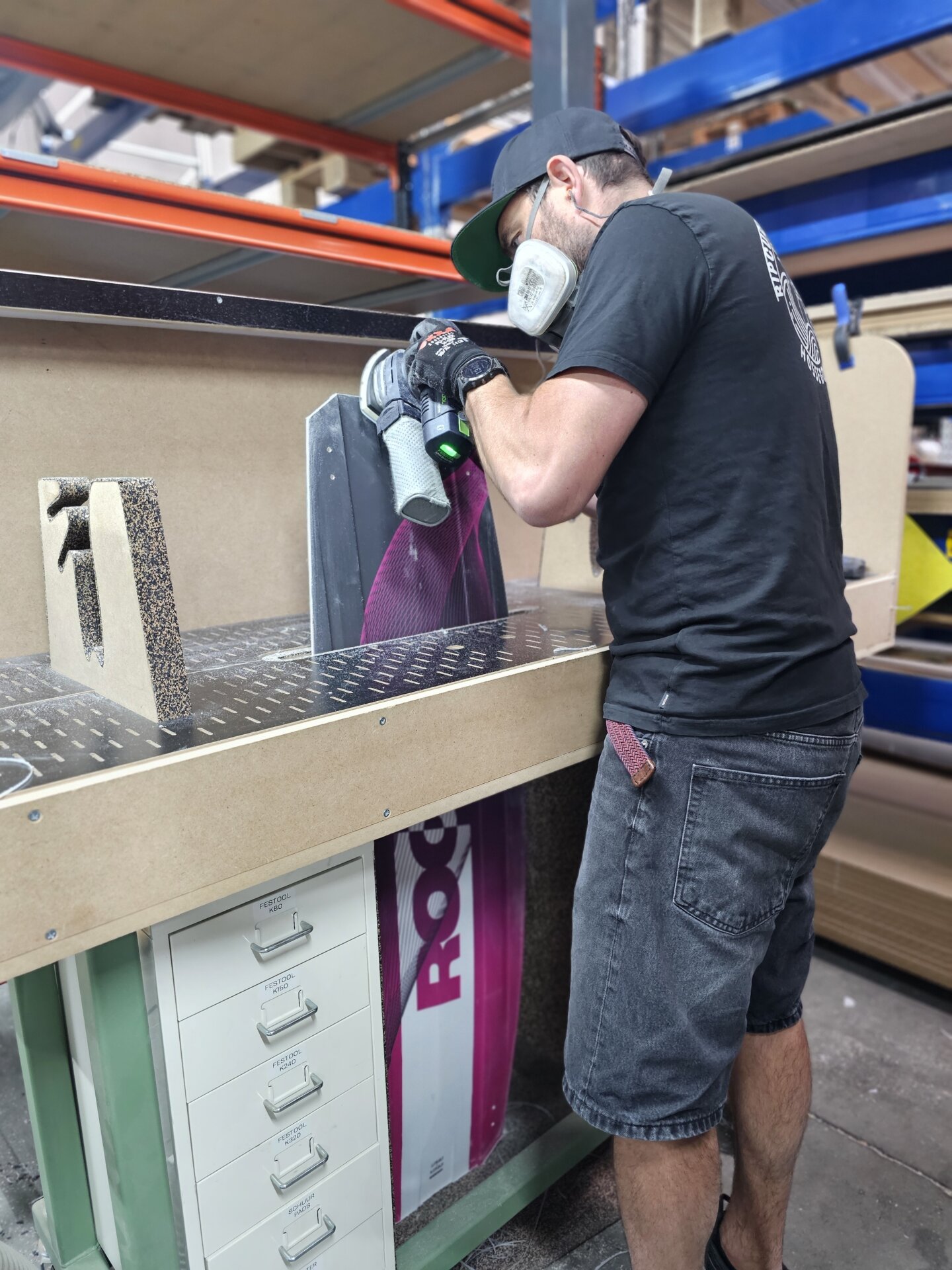
“If you’re going to make something, make it properly, or don’t bother at all.”
Bridle geometry can have a considerable influence on how a kite feels at the bar. In this case, Duotone has tuned the system to preserve the direct, reactive character expected from a D/LAB kite while improving stability and extending its usable wind range.
Built to Boost
Big air is an important part of the Evo D/LAB’s character. The combination of a rigid frame and efficient aerodynamic profile is designed to generate powerful vertical lift, fast acceleration, and plenty of hangtime.
For riders progressing into kite loops, the lightweight three-strut platform provides the speed needed to get the kite through the window. Riders can dial in the speed of the loops with the dynamic steering allowing them to control the rotation and tune the pull of the kite through the turn.
Performance Across the Wind Range
A genuinely versatile kite needs more than an impressive top end. It must also deliver useful power, easy acceleration, and responsive handling before the wind becomes fully established.
The light Aluula D/TX frame helps the Evo D/LAB stay in the air and react to rider input in marginal conditions. Its efficient profile is designed to create early planing power without making the kite feel slow or reluctant to move through the window. Once riding, its forward-flying character should help maintain speed and generate efficient upwind performance.
As the wind increases, the stiffness of the airframe and the support provided by the six-point bridle become more influential. Duotone has focused heavily on top-end stability, with refined canopy tension helping the kite remain settled when conditions become strong or gusty.
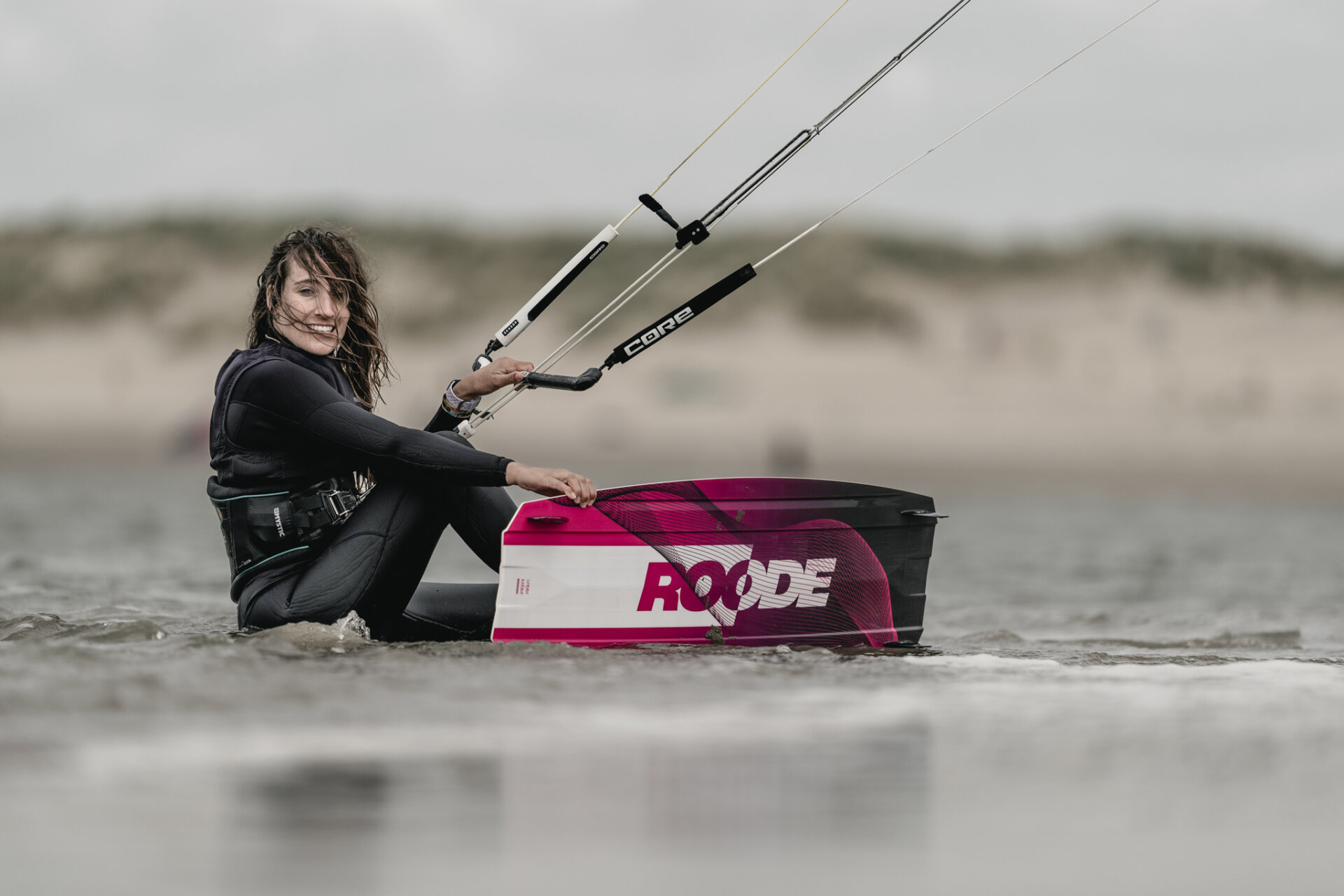
“The first board wasn’t pretty, but it worked, and that was enough to keep going.”
That broad operating range is central to the Evo D/LAB concept. A rider should be able to rig the kite early, enjoy its low-end power and efficiency, and continue using it as the wind increases without the handling becoming unpredictable.
Controlling the Canopy
The 2027 Evo D/LAB features Duotone’s MOD 3S canopy material, which the brand claims offers three times the tear resistance and considerably less stretch than previous generations. Reduced stretch should help the canopy retain its designed profile under load, keeping the kite’s handling and power delivery more consistent over time.
The construction also includes a single-stitch trailing edge. By simplifying this area, Duotone has reduced unnecessary material and weight while creating a cleaner exit for the airflow. The design is intended to reduce flutter, improve aerodynamic efficiency, and limit wear along one of the most heavily worked sections of a kite.
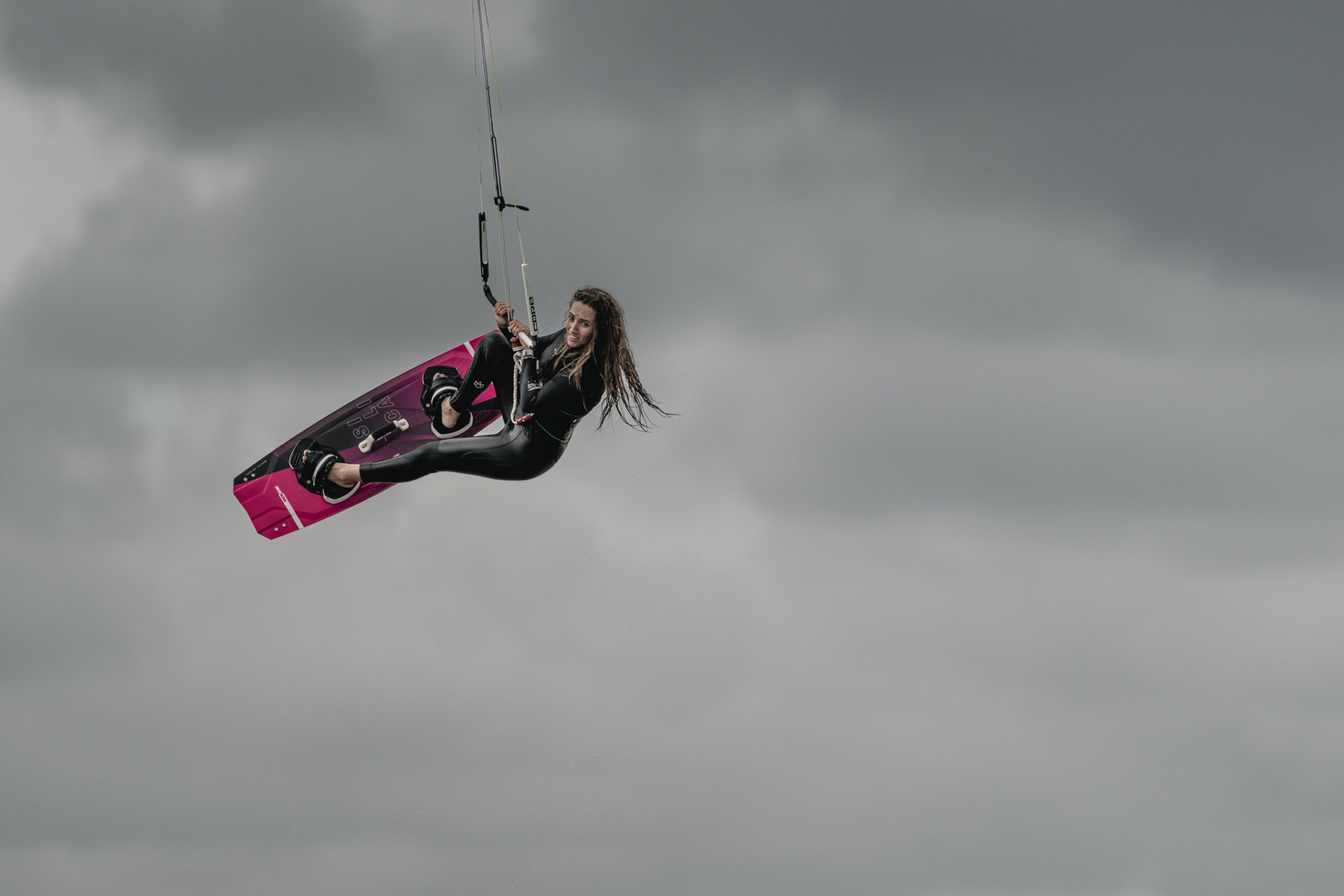
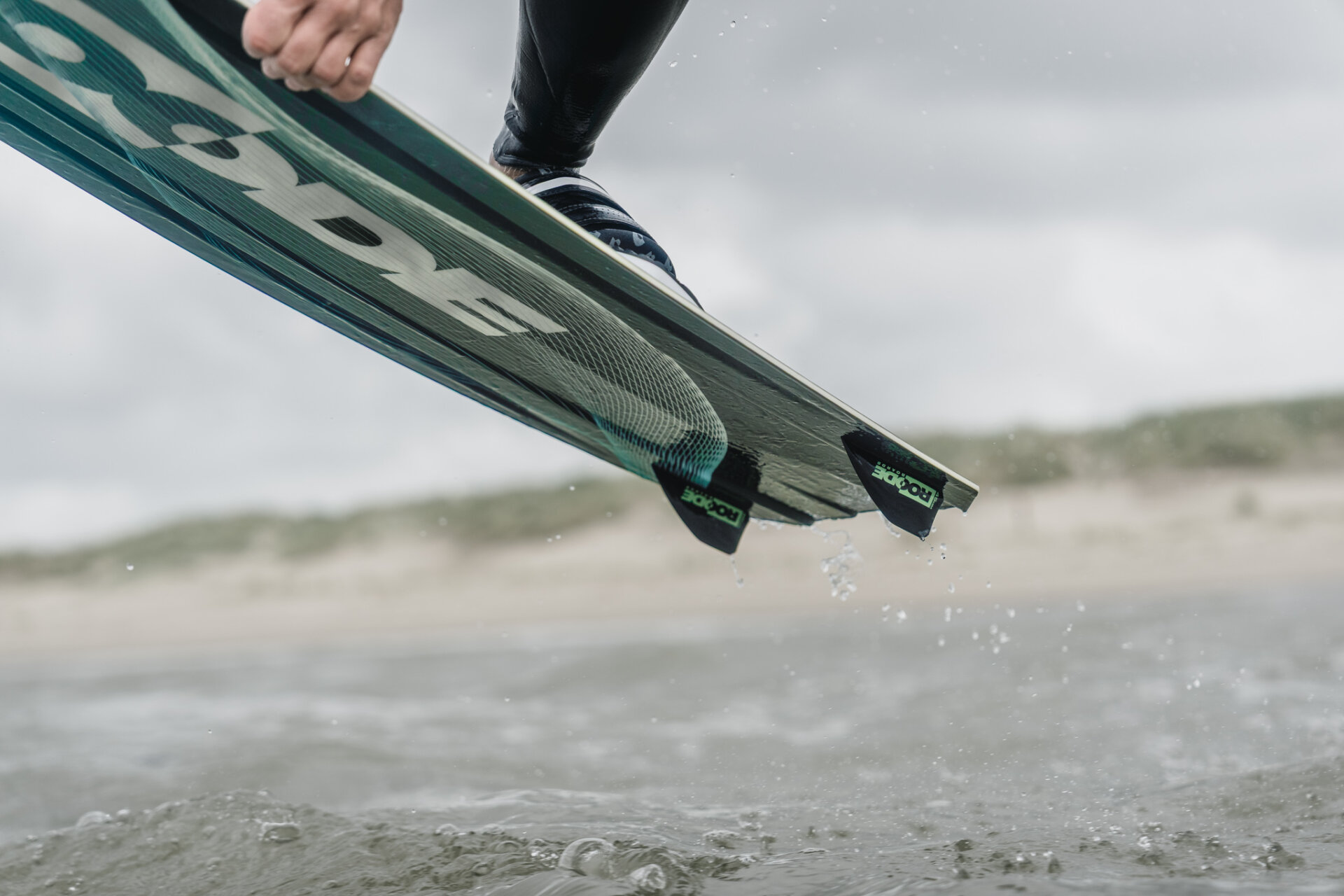
“We realised quickly that what you do on the bottom of the board really matters.”
Micro battens provide further control over the trailing edge and canopy profile. Duotone says this construction is 40% lighter than the battens used on its regular models, allowing the kite to retain a clean, supported shape without undermining the weight-saving work elsewhere.
Smaller Micro Loop connections continue the same approach. These are 40% smaller than the connections found on Duotone’s standard models, reducing weight along the leading edge while maintaining the necessary structural attachment points.
Building a More Unified Frame
The Fusion Strut 2.0 construction joins each strut to the leading edge through a single integrated connection. This is designed to increase stability through the centre of the kite and create a more unified response when the rider steers or loads the canopy.
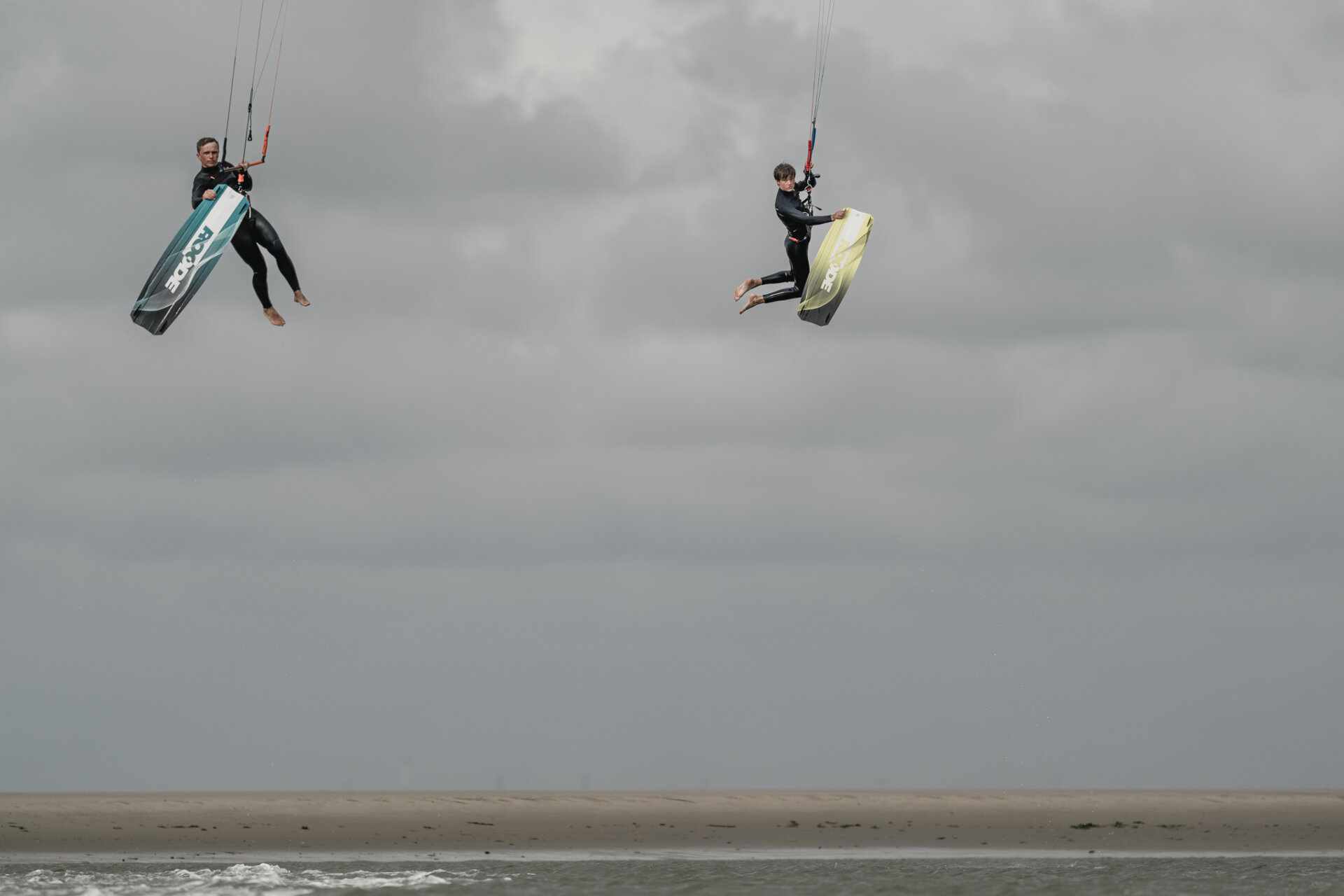
“Everything came back to one thing, grip, because if you can’t hold your edge, nothing else matters.”
Duotone has also paid close attention to the seams running through the airframe. Its high-pressure closing and intersegment seam construction is intended to maintain the integrity of the leading edge when the kite is inflated to high pressure and subjected to extreme forces.
A stiffer airframe is only effective if its individual panels and connections can resist distortion. By strengthening these junctions without adding excessive reinforcement, Duotone is aiming to preserve the lightweight character of the D/LAB construction while maintaining the precision and durability required for powered riding.
More Than a Big Air Kite
Although much of the technology lends itself naturally to big air, the Evo D/LAB remains an all-round performance kite. Its low weight, fast turning speed, and direct steering should also make it an engaging freeride option, while its ability to respond quickly when depowered gives it potential in the waves.
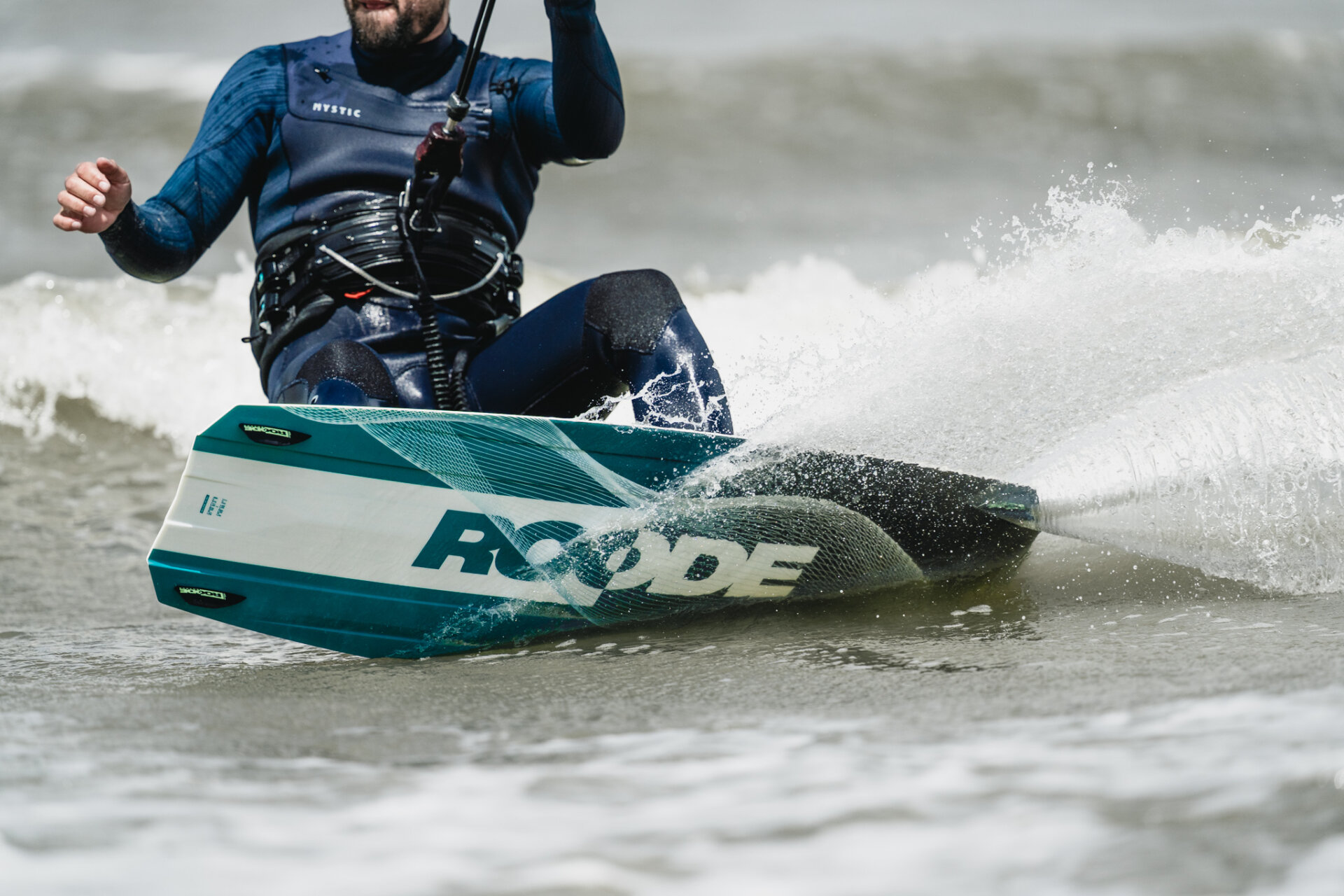
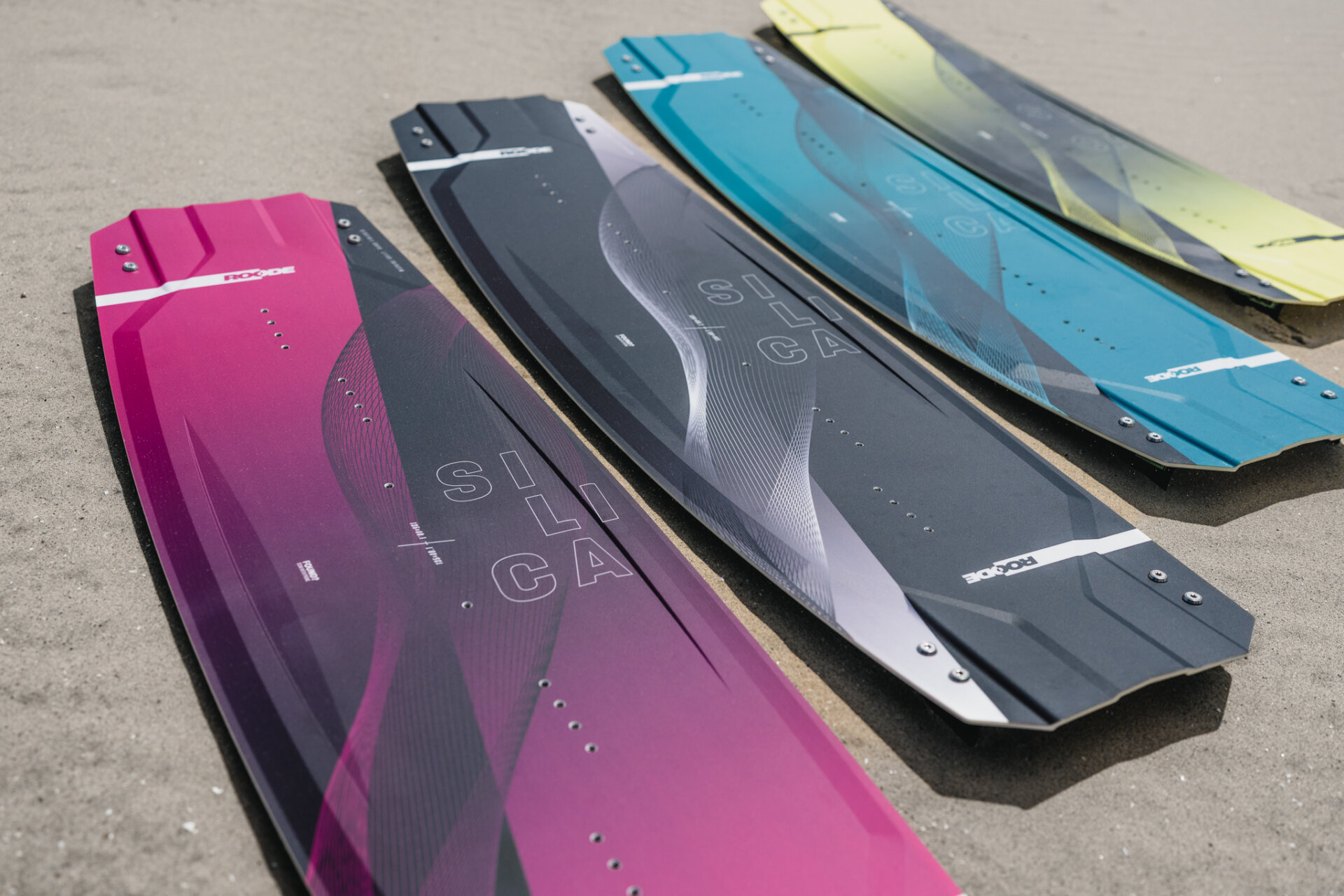
“You can have the best kite in the world, but if the board isn’t working, you’re leaving a lot on the table.”
For freestyle riders, the rigid frame should provide immediate power delivery and strong pop. It is not positioned as a dedicated unhooked freestyle machine, but it offers the performance required for riders who mix hooked-in tricks, loops, rotations, and more traditional freestyle manoeuvres within the same session.
This breadth is arguably what makes the Evo D/LAB particularly interesting. Many high-end kites are designed around increasingly narrow objectives, but the Evo D/LAB is intended for riders who want premium performance without being restricted to one style of riding.
Sizes and Wind Ranges
The 2027 Duotone Evo D/LAB is available in eight sizes, from 6m through to 13m.
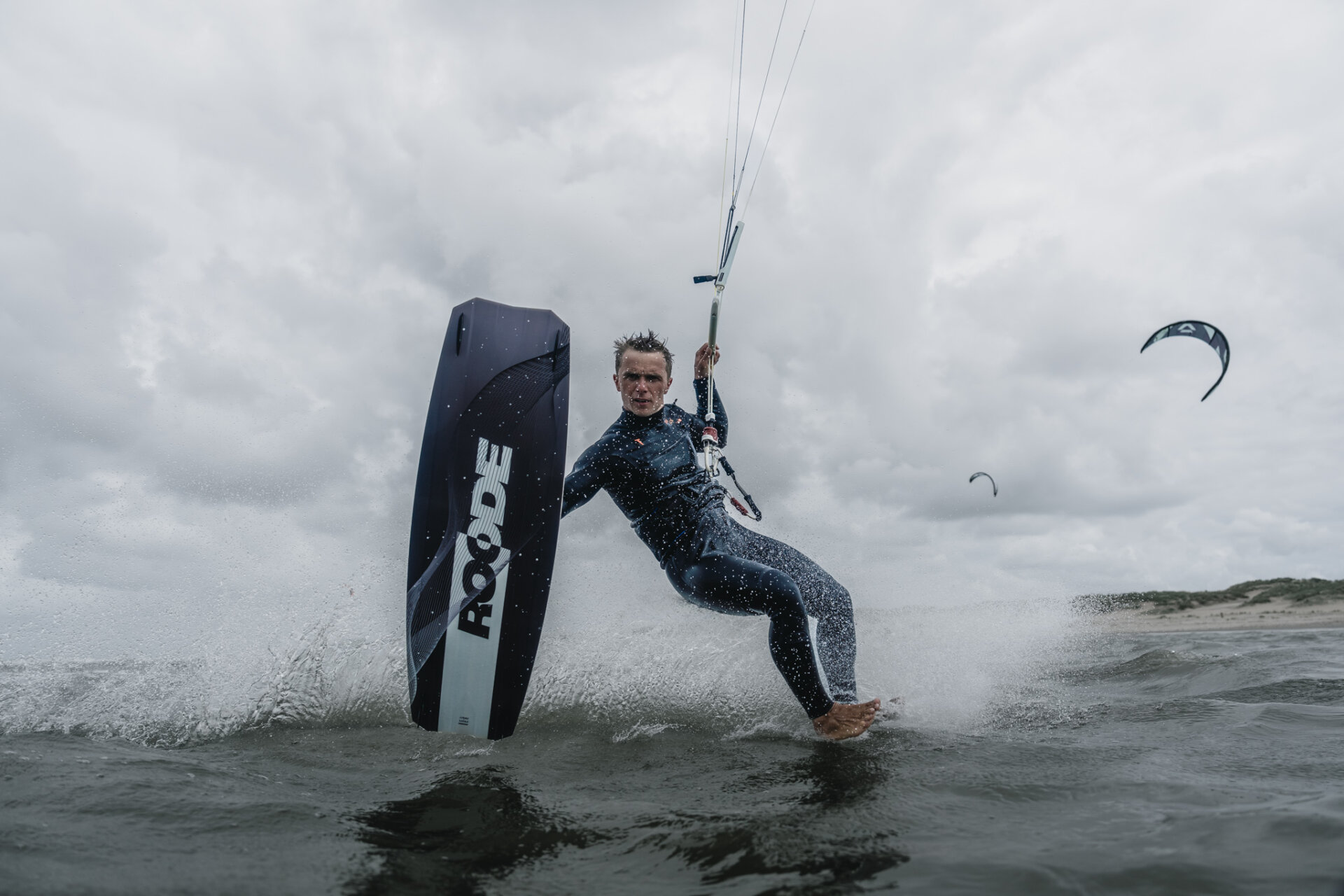
“It’s not about making loads of boards, it’s about getting a few things right.”
| Size | Wind range | Recommended lines | Bar width | Weight |
|---|---|---|---|---|
| 6m | 19 to 42 knots | 22m | S | 1.89kg |
| 7m | 17 to 39 knots | 22m | S | 1.99kg |
| 8m | 15 to 37 knots | 22m | S | 2.10kg |
| 9m | 13 to 35 knots | 22m | S | 2.28kg |
| 10m | 11 to 33 knots | 24m | M | 2.43kg |
| 11m | 10 to 30 knots | 24m | M | 2.55kg |
| 12m | 9 to 28 knots | 24m | M | 2.70kg |
| 13m | 8 to 26 knots | 24m | M | 2.81kg |
The Complete Package
The Evo D/LAB 2027 brings together many of Duotone’s most advanced construction techniques within one exceptionally versatile platform. Its Aluula D/TX frame provides the lightweight rigidity underpinning its performance, while the new six-point bridle, MOD 3S canopy, Fusion Strut 2.0 construction, and refined trailing edge work together to keep the kite controlled across a huge range of conditions.
This is a kite for riders who want fast, precise handling and serious jumping performance, but who do not want their equipment to dictate the type of session they can have. It promises the lift and stability needed for big air, the speed and response required for loops, and the efficiency and accessibility to remain enjoyable during everyday freeride sessions.
The 2027 Evo D/LAB is available to pre-order now and will be offered in sizes from 6m to 13m.
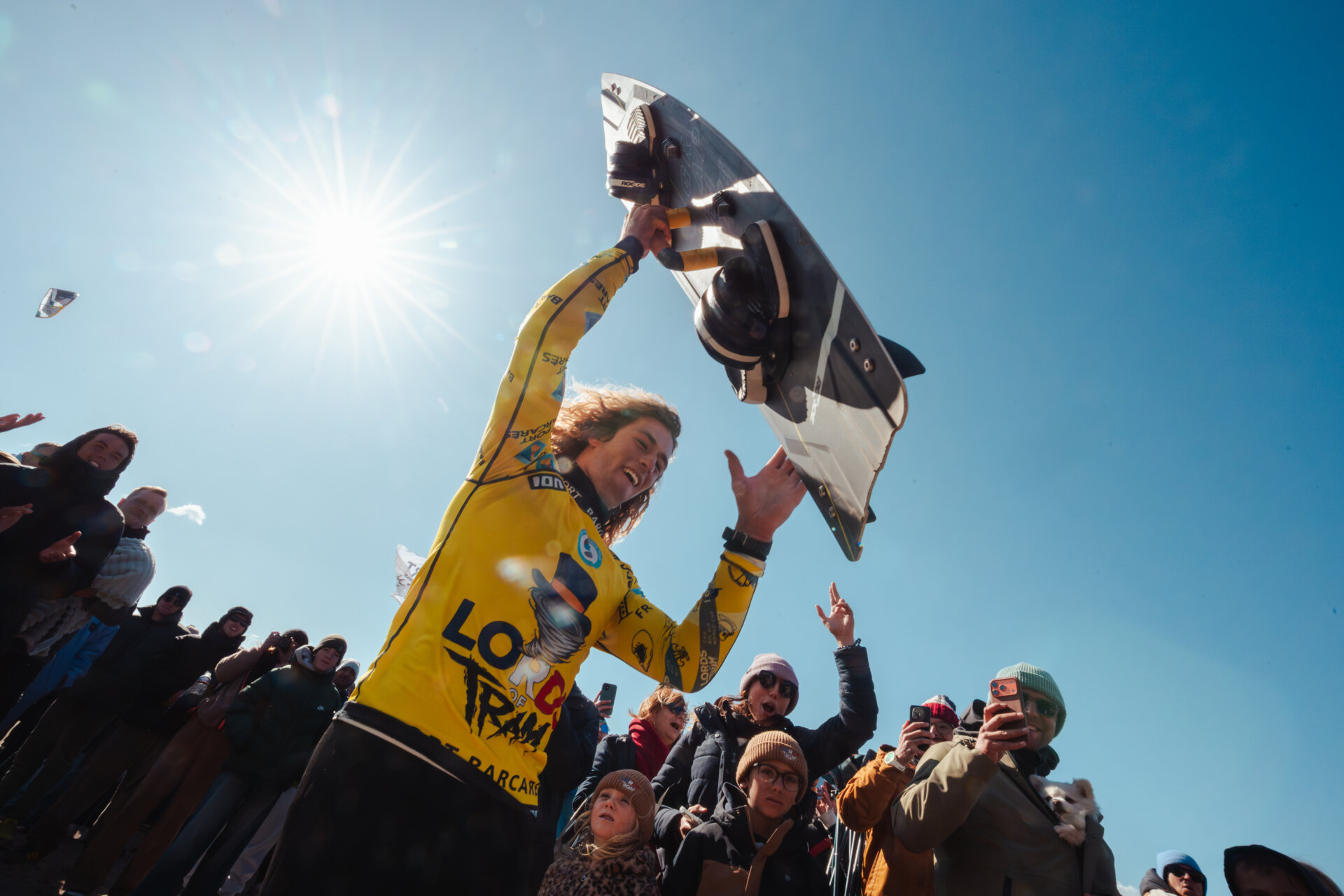
“Seeing it perform at Lords of Tram, that’s when it stopped being a project and became something real.”
Find out more at the Duotone website, Click Here.
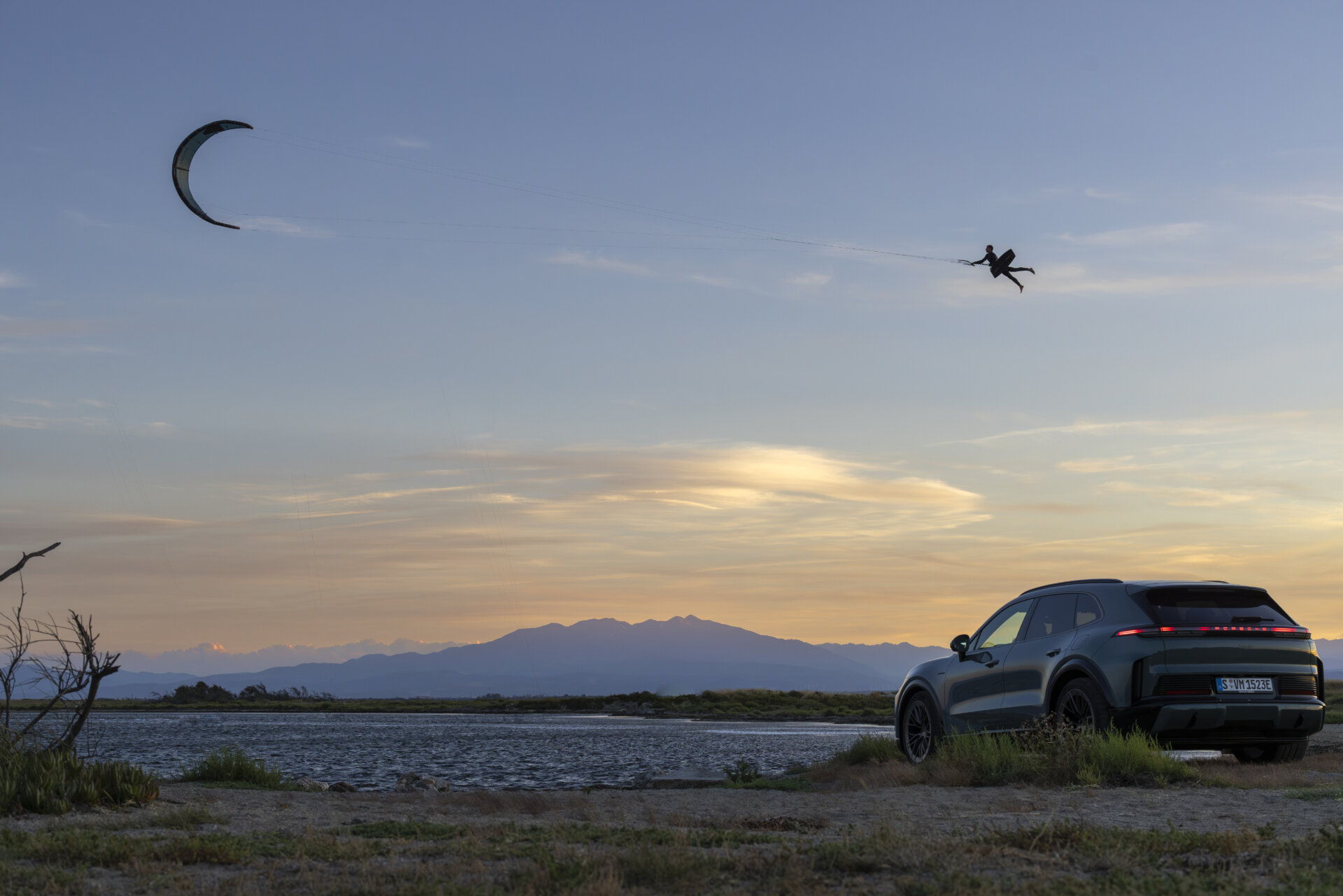
Driven by wind. Powered by performance. The long-standing partnership between Porsche and Duotone unite in a limited-edition collaboration, inspired by a relentless pursuit of innovation, performance, and passion. Drawing design inspiration from the Cayenne Turbo Electric, this exclusive collection translates the visual language of one of the most advanced electric performance vehicles ever created into a unique Kiteboarding package, designed for riders who appreciate precision engineering in every detail.
At the centre of the collection is a special pre-release edition of the 2027 Evo SLS, paired with a matching Jaime SLS featuring a dedicated Big Air Handle and a Click Bar finished in the signature colour palette inspired by the Cayenne Turbo Electric. Every design element reflects the progressive character of the vehicle, combining clean lines, sophisticated colour transitions, and a performance-driven aesthetic that feels equally at home on the water as it does on the road.
Both Porsche and Duotone share a belief that innovation is more than technology alone. It is the courage to challenge conventions, redefine limits, and create experiences that inspire. One brand harnesses electricity, the other harnesses wind. Both transform raw energy into pure emotion.
The PORSCHE x DUOTONE collection celebrates this connection. It represents the meeting point of precision and freedom, engineering and nature, control and adventure.
Produced in strictly limited numbers, the complete collection, across all individual components, is limited to a maximum of just 1,156 pieces, a direct reference to the incredible peak power output of the Cayenne Turbo Electric. Designed for riders, collectors, and enthusiasts who recognise that true performance is not defined by a single discipline. It is a mindset.
Pioneering Spirit. Innovation. Passion.
PORSCHE x DUOTONE.
Where speed meets the power of wind.
Behind the Campaign
The launch campaign was photographed in Le Barcarès, France, with long-time Duotone team rider Reno Romeu helping bring the collection to life. Speaking on The Kite Pod, Reno revealed just how demanding the shoot was.
“We went there to shoot the new Porsche x Duotone campaign with the complete range of equipment. We were only shooting at sunrise and sunset, so every day started around 4am before heading back out again for the evening session. It was tiring, but we got some epic shots.”
Capturing the perfect images wasn’t simply a case of turning up when the wind was blowing. Every sequence had to be repeated from multiple angles, with photographers, film crews and the Porsche team all working together to create the final imagery. The kite needed to be flown in exactly the right position while the car, rider and camera all came together in perfect sync.
Having seen the collection in advance, Reno admits the products made a much bigger impression once they arrived on location.
“I’d seen the products in pictures beforehand and thought they looked nice, but when I saw them in real life and held them in my hands, the quality of the design and the finishing really stood out.”
The campaign also gave Reno the chance to experience the Cayenne Turbo Electric itself.
“The car is insane. It has 1,156 horsepower, and when you put your foot down you’re completely pinned back into the seat.”
More Than a Limited Edition
For Reno, who has now spent almost twenty years as a Duotone rider, projects like this represent more than simply creating a special colourway. They bring together the engineering teams, designers and athletes to produce something that reflects the shared values of both brands: innovation, performance and attention to detail.
The result is one of the most distinctive collaborations the kiteboarding industry has seen, combining Porsche’s performance heritage with Duotone’s continual pursuit of progression on the water.
Listen to the Full Interview
Want to hear more?
In the latest episode of The Kite Pod, Reno Romeu talks about his 20-year career with Duotone, life on the World Tour, testing the next generation of kiteboarding equipment, the launch of his new Duotone Pro Center in Brazil, and the story behind the Porsche x Duotone collaboration.
Available sizes
- Evo SLS 7, 9, 12
- Jaime SLS 136
- Click Bar S/M M/L
Available Packages
Board Package
- Jaime SLS PORSCHE Edition 136cm + Fins + NTT S + Big Air Handle PORSCHE Edition
- Jaime SLS PORSCHE Edition 136cm + Fins + NTT M + Big Air Handle PORSCHE Edition
- Jaime SLS PORSCHE Edition 136cm + Fins + NTT L + Big Air Handle PORSCHE Edition
- Jaime SLS PORSCHE Edition 136cm + Fins + NTT XL + Big Air Handle PORSCHE Edition
Kite Package
- Evo SLS PORSCHE Edition 7m + Click Bar S + Lazepump PORSCHE Edition
- Evo SLS PORSCHE Edition 9m + Click Bar S + Lazepump PORSCHE Edition
- Evo SLS PORSCHE Edition 12m + Click Bar S + Lazepump PORSCHE Edition
- Evo SLS PORSCHE Edition 7m + Click Bar M + Lazepump PORSCHE Edition
- Evo SLS PORSCHE Edition 9m + Click Bar M + Lazepump PORSCHE Edition
- Evo SLS PORSCHE Edition 12m + Click Bar M + Lazepump PORSCHE Edition
Kite only
- Evo SLS PORSCHE Edition 7m
- Evo SLS PORSCHE Edition 9m
- Evo SLS PORSCHE Edition 12m